
Floor preparation
The base decides how a new floor looks and how long it lasts. We check and fix it first, before a single tile or roll is laid.
Why we do not rush this stage
Preparation does not show in the finished room, so it is the easiest stage to cut short. We treat it as a core part of the job. A floor laid over a poor base can bubble, ripple or come loose, and fixing that means starting again.
Why the base matters
Thin resilient floors copy whatever is beneath them. A small ridge, crack or pit in the slab can show through as a bump or shadow once the new surface is down.
Moisture is the other big risk. Water moving up through concrete can lift adhesives and spoil a finished floor. Dealing with these things early costs far less than pulling a floor up later.
What we look at first
Before we plan the work, we inspect the existing floor and the slab beneath it. We want to understand what is there and how it behaves.
- Flatness, using a straight edge across the floor.
- Cracks, joints and loose or hollow patches.
- Moisture in the slab, measured with proper test methods.
- Old adhesive, paint, sealer or leftover coverings.
- Dust and surface strength.
Removing what is already there
Old carpet, vinyl and tiles often need to come up. We lift them with care, remove old glue and sweep away debris. Some older materials need extra caution, so we raise any concerns before work begins.
Sound existing floors can sometimes stay in place and be covered. We tell you honestly when that is possible and when it is not.
Repairing and levelling
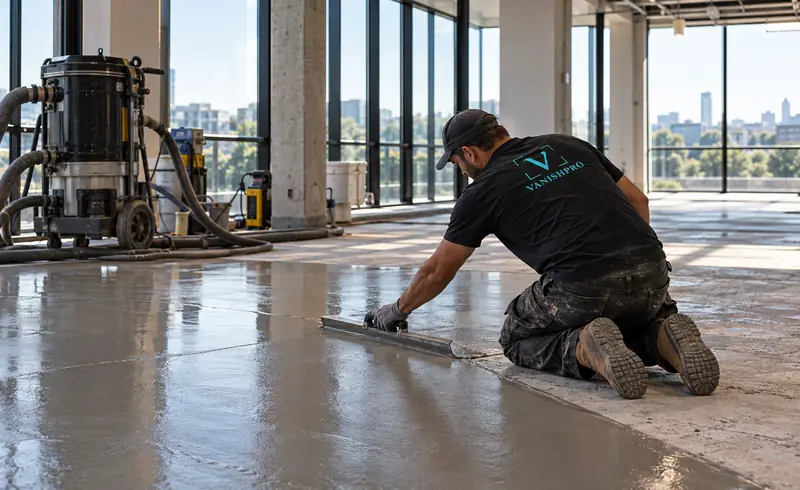
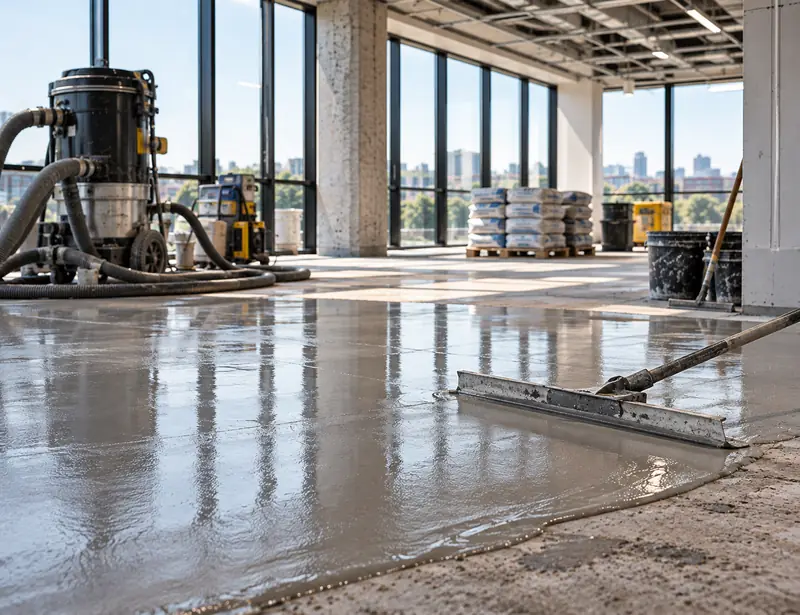
Cracks and damaged joints are filled with repair compounds that suit the movement in the slab. High spots are ground down. Low areas are filled using a self-levelling compound that flows out to a flat finish.
Where moisture is a concern, we use a suitable barrier or sealer before anything else goes on top.
Primers and the final check
A primer helps adhesive grip the base and controls how fast the slab soaks up water. We choose one to match the floor being laid.
Once the base is dry and cured, we check it again. Only then does the new floor go down. Rushing this stage is the easiest way to cause trouble later.
Related pages
Tell us about your floors
Send the rooms, the floor you have now and your dates. We reply on the next business day.
Ask for a quote