
Flooring
Food-grade and laboratory flooring
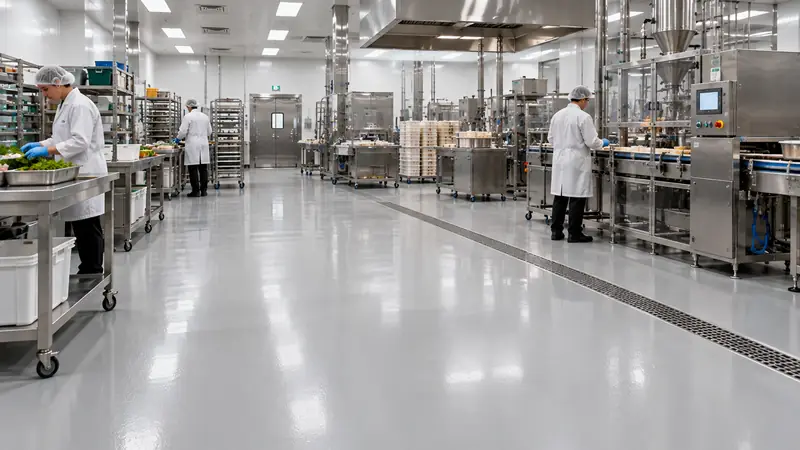
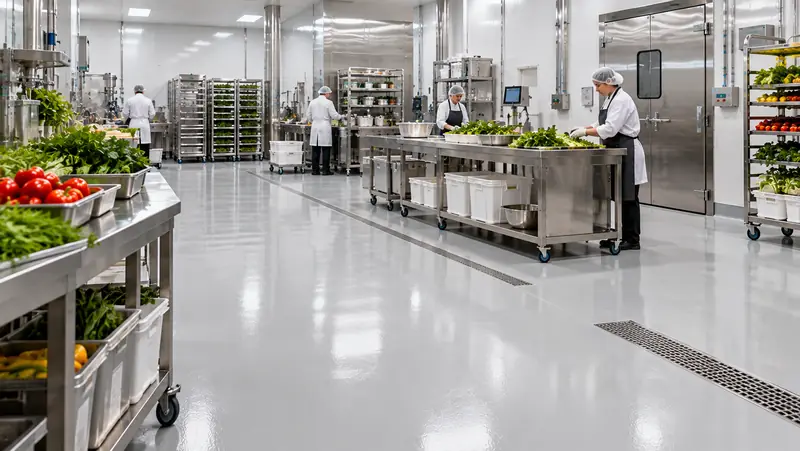
Kitchens, food plants and laboratories need floors that do not hold dirt or germs. The right system seals the surface, rolls up the wall and copes with washdowns and harsh products.
What food-grade and lab flooring is
These systems are chosen with the whole room in mind. Walls, plinths, doorways and drains all form part of the hygiene picture, so the floor is planned together with them. In labs, some floors also control static, which protects sensitive equipment and people working with it. A short list of requirements from the operator at the start lets us propose a system that fits.
This group covers hard-wearing vinyl systems built for hygiene. The surface does not soak up liquids. Joins are welded, and the floor curves up the wall, leaving no open corner to trap soil.
Some products also resist acids, oils, solvents and strong washing agents, which is important in labs and processing rooms. Colour helps too, since light floors show soil and let staff spot problems early.
Where it suits
Pick it where cleanliness rules decide the floor. Commercial kitchens, canteens, food preparation rooms, pharmacy and laboratory spaces, and clean areas in healthcare all fit.
- Sealed surface that does not take in liquids
- Welded seams and coved edges
- Resists many chemicals, subject to the maker's chart
- Grip options for wet and greasy rooms
How it is laid and cared for
Because the floor is part of a hygiene plan, installation details matter. The base must be flat and dry. Seams are welded, junctions are sealed, and drains and plinths are finished so washdown water has no place to pool.
Care follows a set routine, often tied to a food safety or lab plan. Use only products that the maker approves for the floor, and rinse well after each wash.
What to ask before choosing
Raise these points with your designer or safety adviser.
- What chemicals and temperatures will touch the floor?
- Is a slip rating needed, and at what level?
- Does the floor need coved skirting to a set height?
- Which standards or audits apply to the room?
- How long can the room be closed for work?
Questions
Why not use ordinary tiles in a kitchen?
Tile grout lines can crack and trap dirt. A welded vinyl floor has far fewer open joints, which makes hygiene easier to keep up.
Can the floor handle hot water washdowns?
Many ranges can, up to a limit set by the maker. Check the temperature range before you decide.
Will chemicals harm the floor?
Resistance depends on the product and the chemical. Ask for the maker's chemical resistance chart and compare it to what you use.
Related pages
Tell us about your floors
Send the rooms, the floor you have now and your dates. We reply on the next business day.
Ask for a quote